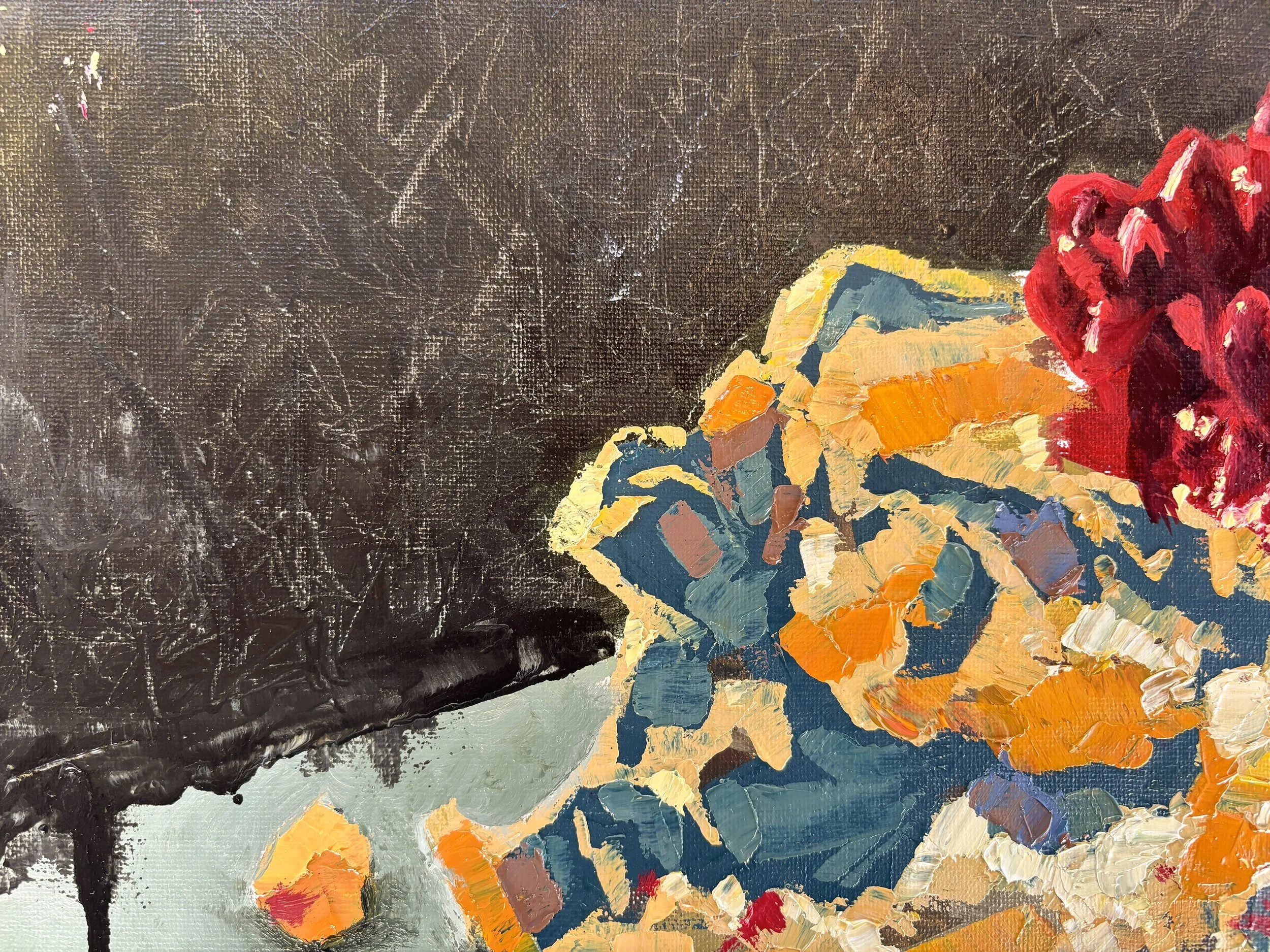
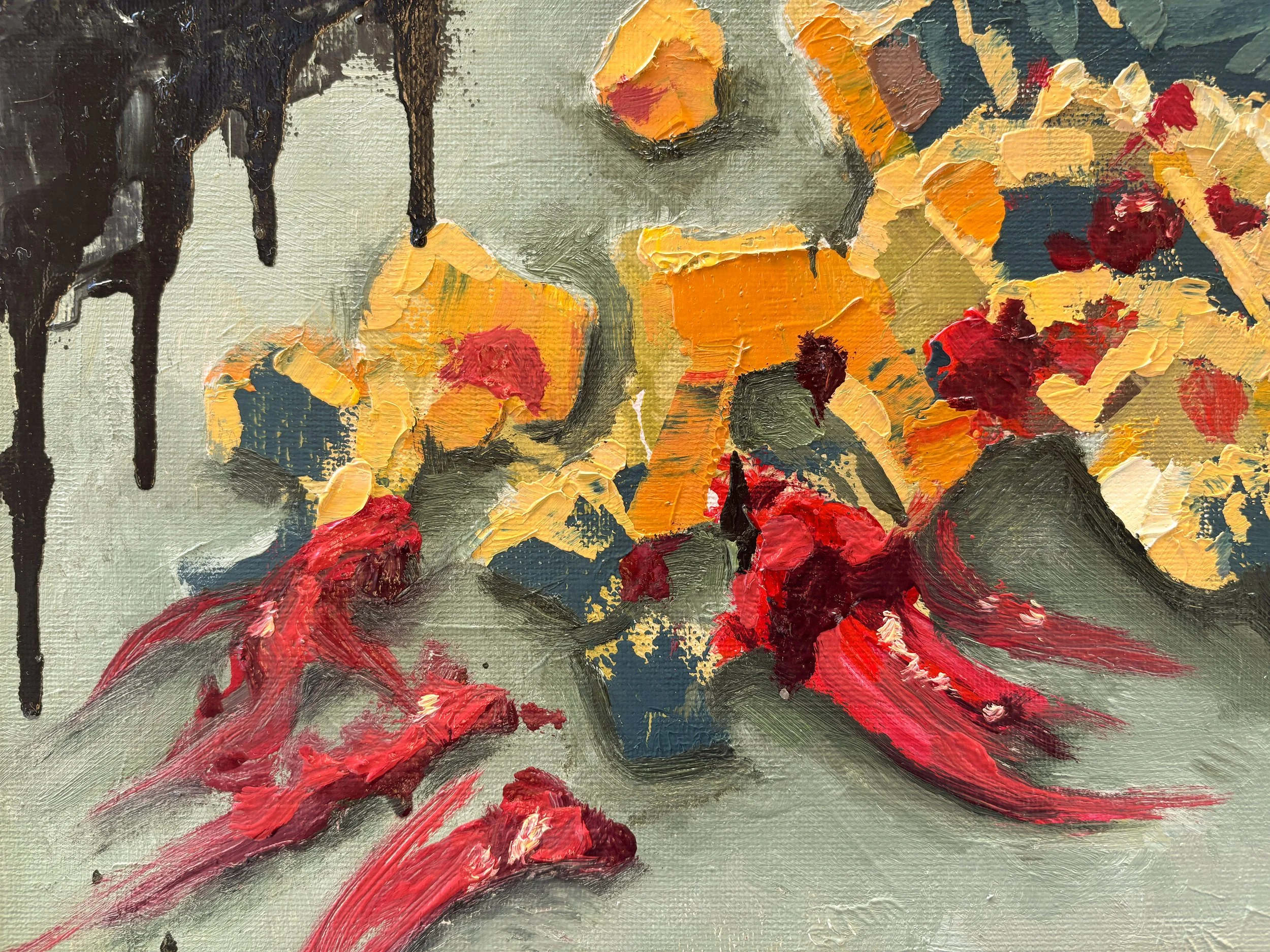
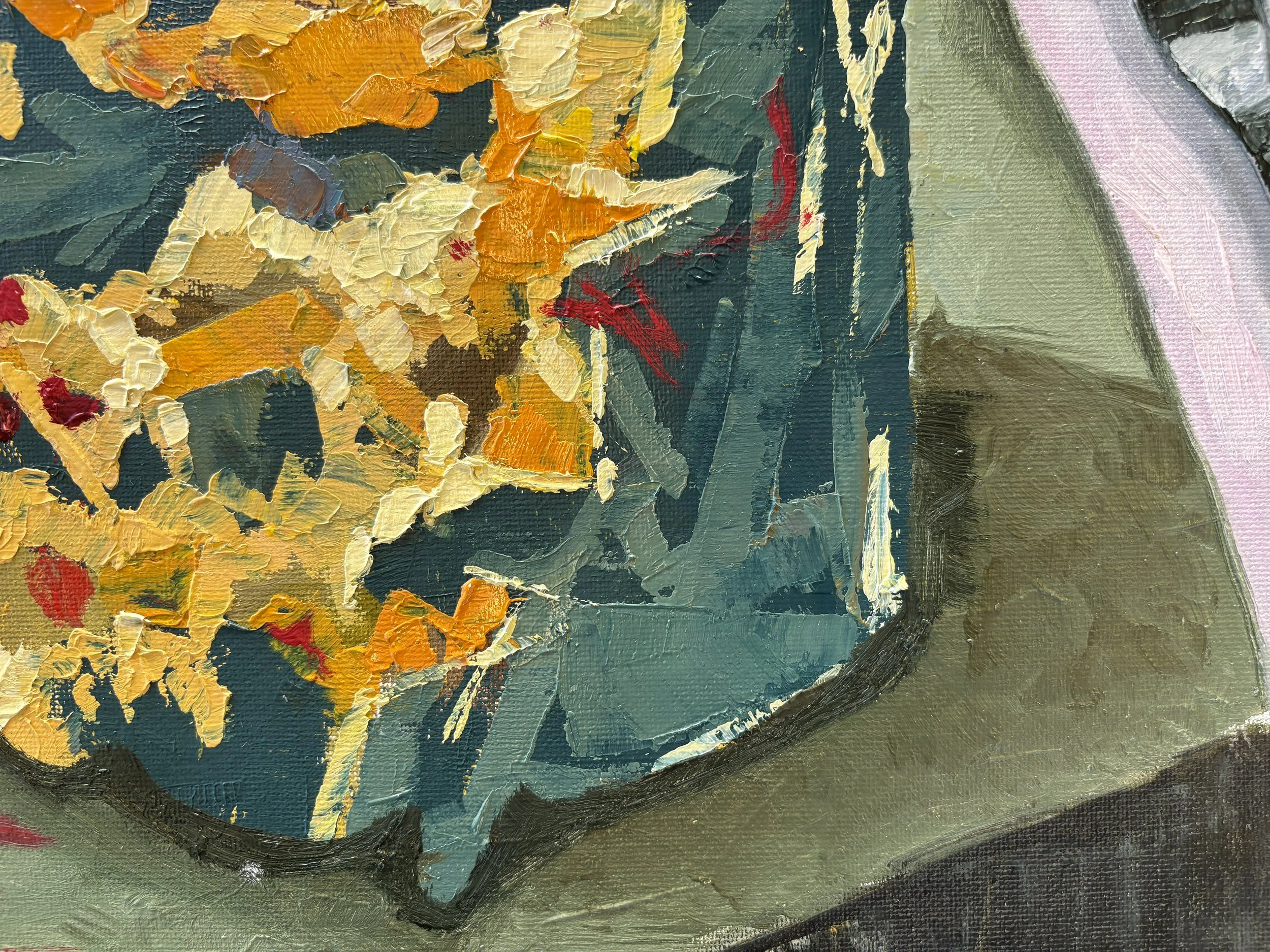
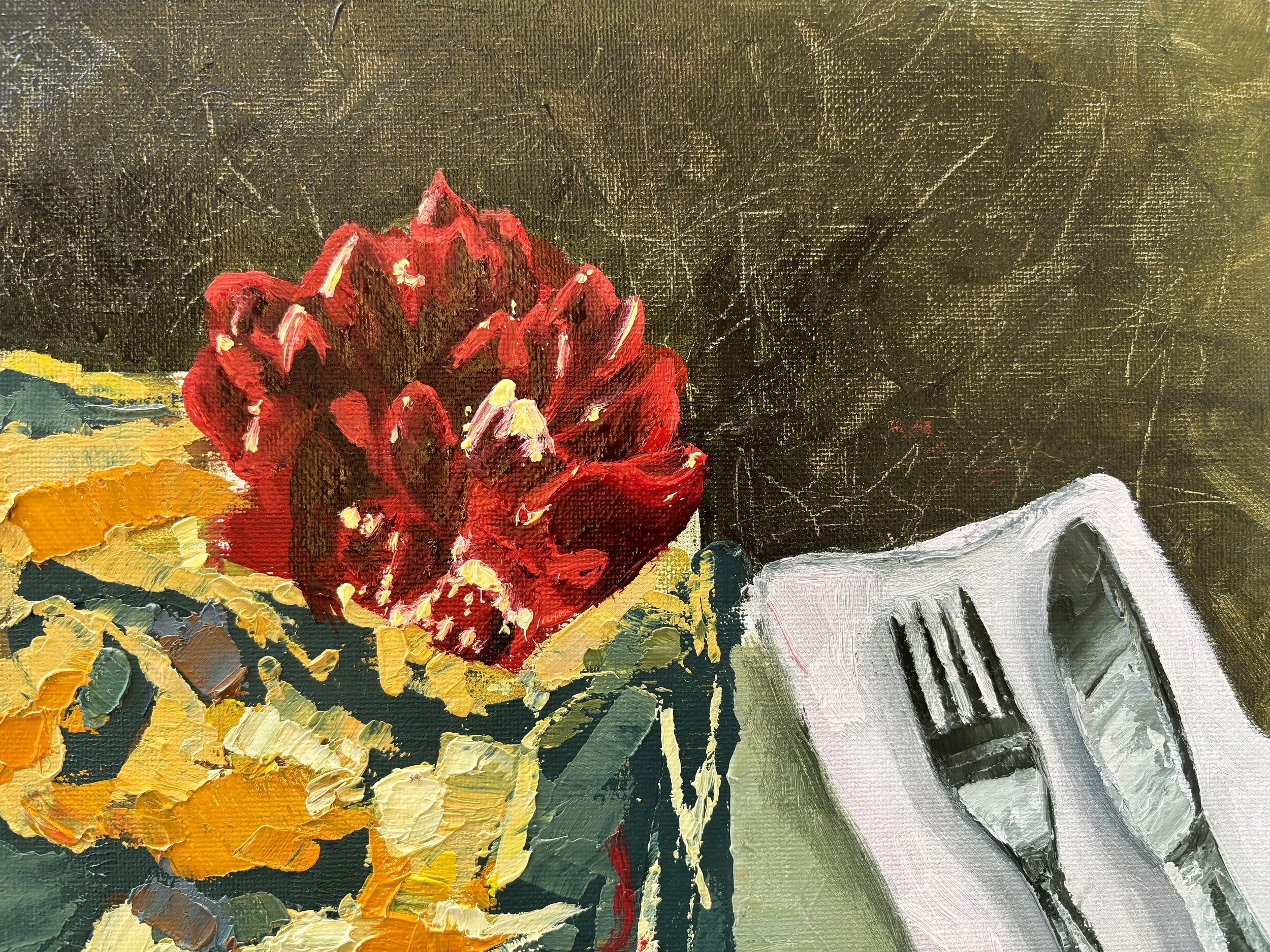
Gorge, 2025
oil on canvas pad, 12" x 16"
A recent development I’ve faced is disordered eating, which takes control over my otherwise mundane life experiences in almost amusing ways. I skip social gatherings with my closest acquaintances, or end up in some far-off world filled with dysmorphic imagery—stomachs, lard, calories, bodies bodies bodies—when I should be paying attention to whoever opposites me across the restaurant table. Food makes me lose control over my mind and body. When I binge, my senses are distorted until they no longer reflect reality. My taste buds overreact to every particle of flavor and send me into a euphoric and violent trance. Meanwhile, the rest of me is in the dark: I can’t see or hear; I lose sensation of my body. I don’t register how full I am because nothing can satiate me. My mind is hungry for pleasure and I don’t stop shoveling cake down my throat until primal pain gets in the way. I float back down to earth. The high is over and I’m not numb anymore. I feel my body aching, my legs swelling, limbs thick and hot, so I crawl to the toilet to start the second half of the program. When I’m finished, ruptured blood vessels make my eyes glow red.
I view art as a personal practice of discovering inner truth. This process includes carefully examining the things I don’t understand about myself, including my moments of heightened emotional and physical sensation. I create to discover who I am, and the product that people see just marks the end of that process. And though I can’t predict what the work may stand to represent once offered to the outside world, I believe that the more vulnerable my process the better my art may interact with outside forces. That is, the more useful it may be in revealing outer truths.